Blood Sugar Balance Without Obsession: The Crash-Free Morning Guide (Stable Energy, No Tracking Required)

Share
The crash-free morning: what to eat for stable energy
If your morning energy feels like a rollercoaster—sharp start, mid-morning slump, craving-led snack spiral—you’re not alone. Modern routines make spikes and crashes easy: rushed breakfasts, ultra-processed convenience foods, long screen-heavy mornings, and coffee on an empty stomach.
The good news? Blood sugar balance doesn’t need spreadsheets, restriction, or wearing your wellbeing like a project. It’s mostly about building a breakfast that digests slowly, supports steady energy, and keeps you satisfied long enough to focus.
This is a “support, don’t punish” approach—simple upgrades that work whether you’re at home, in the office, or grabbing something on the go.
What blood sugar is
Think of blood sugar (glucose) as your body’s usable energy currency. When you eat carbohydrates (fruit, oats, toast, cereal, pastries), they’re broken down into glucose and released into your bloodstream. Your body then moves that glucose into your cells to be used as energy.
When that release happens too quickly (sugary cereal + juice + rushed latte), you can feel:
-
a short burst of energy (and sometimes anxiety/jitters)
-
a fast drop later that feels like fatigue, brain fog, irritability, and cravings
When release happens more gradually (balanced breakfast with protein, fibre and fats), energy tends to feel:
-
steadier
-
calmer
-
more focused
-
less snack-driven
No tracking needed—just better structure.
Why energy spikes and crashes happen so easily in modern routines
Energy crashes aren’t a personal failing. They’re often a predictable response to a few modern defaults:
1) Low fibre intake (so meals digest too fast)
Fibre helps slow digestion and supports steadier glucose release. Yet according GOV.UK to in the UK, 96% of adults don’t meet the recommended fibre intake (30g/day).
2) Ultra-processed convenience eating
Ultra-processed foods are designed to be hyper-palatable and easy to overeat—and they often deliver quick carbs with little fibre or protein. A UK NIHR-funded analysis found adolescents get around two-thirds of their daily calories from ultra-processed foods.
Even if you’re not living on packaged snacks, the overall food environment nudges you towards “quick energy” options that don’t keep you steady.
3) Coffee-first, food-later mornings
Caffeine can be brilliant—but on an empty stomach (especially when stressed or underslept), it can amplify the feeling of a spike-then-crash. Pairing coffee with a balanced breakfast often feels noticeably smoother.
4) Long sedentary stretches
Sitting for hours after eating can make the post-meal dip feel more intense. Tiny movement “interruptions” can change the whole curve.
The basics: how to build a “balanced plate” breakfast
For stable energy, you’re aiming for three anchors — plus supportive daily rituals that help regulate energy naturally.
1) Protein (keeps you satisfied and steadier)
Aim for 20–30g at breakfast when possible.
Easy options: Greek yoghurt, eggs, cottage cheese, tofu scramble, protein-rich kefir, smoked salmon, tempeh.
DIRTEA ritual pairing: Add DIRTEA Lion’s Mane Focus Powder to your morning drink or smoothie as part of a calm-clarity ritual rather than stimulant energy.
2) Fibre (slows digestion, supports steady release)
Easy options: oats, chia/flax, berries, pears/apples, wholegrain toast, beans (yes — even at breakfast), seeds, nuts.
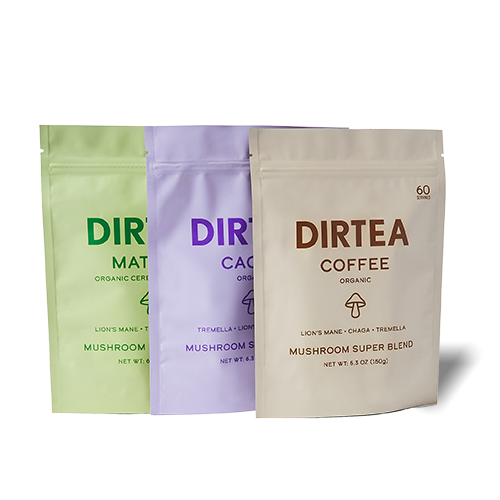
DIRTEA ritual pairing: Fibre-rich breakfasts pair beautifully with DIRTEA Matcha or Mushroom Coffee blends for smoother, more stable energy release.
3) Healthy fats (smooths the curve + adds staying power)
Easy options: nut butter, avocado, olive oil, full-fat yoghurt, nuts, seeds.
DIRTEA ritual pairing: Fats help slow caffeine absorption, making mushroom-infused drinks feel calmer and more sustained.
A simple formula:
Protein + fibre-rich carbs + healthy fat
Add colour (berries/greens) and you’ve got a crash-resistant base — no tracking required.
Crash-free breakfast ideas (real-life, not “perfect”)
Option A: The steady oats bowl
-
Oats + chia seeds
-
Greek yoghurt stirred in (or on the side)
-
Berries + nut butter
-
Cinnamon (bonus: flavour + satisfaction)
DIRTEA add-in: Stir DIRTEA Lion’s Mane Focus Powder into your morning drink alongside this bowl for calm mental clarity.
Option B: The savoury toast
-
Wholegrain toast
-
Eggs or scrambled tofu
-
Avocado + cherry tomatoes
-
Optional side: fruit or kefir
DIRTEA add-in: Pair with DIRTEA Mushroom Coffee or Matcha with Lion’s Mane for smoother, steadier energy without jitters.
Option C: The “quick jar”
-
Kefir or yoghurt
-
Mixed berries
-
Ground flax/chia
-
Handful of nuts
(Make it in 2 minutes, eat it anywhere)
DIRTEA add-in: Add DIRTEA Cordyceps Performance Powder to a mid-morning drink for natural energy support without sugar spikes.
Option D: The grown-up smoothie
-
Protein base (Greek yoghurt/kefir/tofu)
-
Fibre add-ins (chia/flax/oats)
-
Frozen berries + spinach
-
Nut butter
DIRTEA add-in: Blend in DIRTEA Lion’s Mane or Cordyceps for focus and energy support without crash patterns.
Smoothies become crashy when they’re basically fruit juice — so anchor them.
Easy upgrades that make the biggest difference
1) Breakfast tweaks (small changes, big payoff)
-
Add protein to what you already eat:
Cereal? Add yoghurt. Toast? Add eggs/cottage cheese. Smoothie? Add kefir + chia.
-
Swap “naked carbs” for fibre-rich versions:
White toast → wholegrain.
Flavoured yoghurt → plain + berries.
Pastry → save for later and pair it, not solo it.
Front-load your breakfast:
If mornings are hectic, prep one component (boiled eggs, chia pudding, overnight oats, yoghurt jars).
2) Snack strategy (so you don’t crash at 11:00)
The goal isn’t no snacks — it’s better snacks.
A “stable snack” usually includes protein or fat + fibre, not just quick sugar.
Better snack combos:
-
Apple + nut butter
-
Hummus + oatcakes/veg
-
Yoghurt + seeds
-
A handful of nuts + fruit
-
Cheese + rye crackers
If you’re craving sweets mid-morning, try this first:
Drink water → eat protein → then decide.
Cravings often soften once your body feels supported.
3) Post-meal movement (the 10-minute secret)
You don’t need a full workout. A gentle walk after eating can support a smoother post-meal energy curve.
A 2023 systematic review found that walking has a greater acute beneficial impact on postprandial (after-meal) blood glucose when done as soon as possible after a meal.
Think: 10 minutes around the block, a walk while on a call, or even a quick tidy-up + stairs.
A crash-free morning routine you can actually follow
Try this tomorrow:
-
Eat within 60–90 minutes of waking (even something small)
-
Build breakfast using: protein + fibre + fat
-
Have coffee with breakfast, not instead of it
-
Pack a stabilising snack (protein/fat + fibre)
-
Do 10 minutes of movement after your first proper meal
That’s it. No obsession required—just rhythm.
FAQs
Is blood sugar balance only relevant if you’re diabetic?
Not at all. Most people notice the felt experience of spikes and crashes—energy dips, cravings, brain fog—especially with modern, rushed routines.
What’s the best breakfast for stable energy?
Usually one that includes protein, fibre, and healthy fats—for example, yoghurt + berries + seeds, or eggs + wholegrain toast + avocado.
Are smoothies bad for blood sugar?
They can be fine—just avoid “fruit-only” blends. Add protein (yoghurt/kefir/tofu) and fibre (chia/flax/oats) to make them steadier.
Does walking after meals really help?
Evidence suggests post-meal walking can reduce postprandial glucose excursions, especially when done soon after eating.
References
UK National Diet and Nutrition Survey 2019–2023 (fibre intake). GOV.UK NIHR news release on ultra-processed food intake among UK adolescents. NIHR
National Institute for Health and Care Research. (2024, July 18). NIHR study finds ultra-processed food makes up almost two-thirds of calorie intake of UK adolescents. https://www.nihr.ac.uk/news/nihr-study-finds-ultra-processed-food-makes-almost-two-thirds-calorie-intake-uk-adolescents nihr.ac.uk
Engeroff, T., et al. (2023). After Dinner Rest a While, After Supper Walk a Mile? A Systematic Review and Meta-Analysis on the Acute Effects of Postprandial Exercise on Glucose and Insulin Levels. Sports Medicine. (Open access via PubMed Central). PMC