Magnesium Explained: Why Everyone’s Talking About It (and How to Use It Without Obsession)

Share
Why magnesium is suddenly everywhere
Magnesium isn’t trending because of hype — it’s trending because of modern deficiency patterns and modern stress culture.
National data shows significant micronutrient gaps in the UK, with 19% of adults in their twenties consuming magnesium below the Lower Reference Nutrient Intake (LRNI), and women aged 20–59 having significantly lower intakes than men for nine key micronutrients, including magnesium, iron, calcium, iodine, and B vitamins.
According to a review, worldwide, between 30% and 35% of adults have some symptoms of insomnia, which may increase up to 75% in older people. This drives increased interest in minerals and nervous-system-support nutrients.
When you combine low intake, high stress, poor sleep, ultra-processed diets, and constant nervous system stimulation, magnesium becomes less of a “supplement trend” and more of a foundational wellbeing conversation.
Why everyone’s talking about magnesium
Magnesium supports the systems that modern life puts under the most pressure:
-
the nervous system
-
energy regulation
-
sleep quality
-
stress resilience
-
muscle recovery
-
mental fatigue
-
emotional regulation
It’s not a stimulant.
It’s not a sedative.
It’s not a hack.
It’s a regulator — helping the body move between effort and rest, focus and calm, energy and recovery.
As wellness culture shifts away from extremes and towards nervous-system health, sustainable energy, and long-term balance, magnesium naturally becomes part of the conversation.
What magnesium supports
Sleep
Magnesium supports the body’s ability to shift into rest mode. People often associate it with:
-
easier wind-down
-
calmer evenings
-
deeper relaxation
-
improved sleep quality
This is why magnesium is commonly linked to evening routines and nighttime rituals.
Muscles & recovery
Magnesium plays a role in:
-
muscle relaxation
-
nerve signalling
-
physical recovery
-
tension regulation
Low levels are often linked to tightness, cramping, twitching and fatigue — especially in people who train, travel often, or live high-stress lives.
Mood & stress resilience
Magnesium supports nervous-system regulation rather than stimulation. It’s associated with:
-
emotional balance
-
calmer stress response
-
mental fatigue support
-
resilience during high-pressure periods
Energy
Magnesium supports ATP production (your body’s cellular energy system).
This means it doesn’t “boost” energy like caffeine — it supports how efficiently your body produces and uses energy.
Low magnesium often feels like:
-
tiredness
-
burnout
-
low motivation
-
brain fog
-
wired-but-tired energy
Why has it become a modern essential conversation
Modern life increases magnesium demand while reducing intake:
-
ultra-processed diets
-
high caffeine consumption
-
poor sleep rhythms
-
chronic stress
-
sedentary lifestyles
-
digital overload
-
irregular eating patterns
This creates a perfect storm where the body’s regulatory systems struggle — and magnesium becomes relevant not as a trend, but as foundational support.
Food-first magnesium
Natural magnesium sources
-
leafy greens (spinach, kale)
-
nuts (almonds, cashews)
-
seeds (pumpkin, chia, flax)
-
whole grains
-
legumes
-
avocado
-
bananas
-
dark chocolate
A whole-food diet absolutely contributes to magnesium intake — and should always be the foundation.
When supplementation makes sense
Supplementation isn’t failure — it’s support during high-demand seasons.
It may be useful when:
-
stress is high
-
sleep quality is low
-
training load is heavy
-
burnout symptoms appear
-
digestion is compromised
-
routines are inconsistent
The goal isn’t dependency — it’s regulation.
Support, not obsession.
Consistency, not extremes.
Different types of magnesium explained
Magnesium glycinate
Best known for calm, relaxation and nervous-system support
→ Think: sleep, stress, evening routines
Magnesium citrate
Often digestion-focused
→ Think: gut support, motility
Magnesium malate
Associated with energy and muscle support
→ Think: fatigue, recovery, performance
Magnesium threonate
Cognition-focused, more niche
→ Think: brain health, focus
Magnesium oxide
Low absorption, mainly medicinal use
→ Think: not ideal for daily wellness routines
You don’t need all of them.
You don’t need complexity.
You just need alignment with your intention.
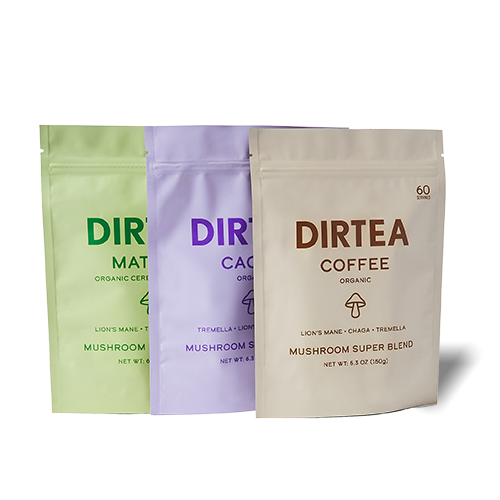
Where DIRTEA fits: ritual-based regulation, not quick fixes
DIRTEA’s philosophy aligns with magnesium-supportive living:
calm energy, daily rituals, nervous-system regulation, sustainable wellbeing.
Morning clarity
Instead of stimulant-driven mornings:
-
DIRTEA Lion’s Mane Focus Powder supports calm clarity and focus
-
Ideal alongside nourishing breakfasts and steady routines
Midday energy
Rather than chasing energy spikes:
-
DIRTEA Cordyceps Performance Powder supports natural energy pathways
-
Best paired with food, hydration, and rhythm
Evening calm
This is where magnesium-supportive living aligns most naturally:
-
DIRTEA Reishi Calm Powder supports evening wind-down rituals
-
Perfect for slow nights, nervous-system regulation and sleep routines
The focus isn’t sedation — it’s down-regulation.
A modern magnesium lifestyle (without obsession)
A modern magnesium-supportive lifestyle doesn’t rely on extremes or rigid rules. It starts with simple foundations: whole-food nutrition, proper hydration, regular movement, consistent sleep rhythms, and practical stress management. From there, gentle daily rituals—calm mornings, steady energy through the day, and slower, quieter evenings—help create balance. Support should feel natural, focusing on food first and using supplements only when needed, while keeping those small, consistent habits at the centre. No extremes, no fear, and no dependency cycles—just steady routines that help the body function at its best.
Magnesium isn’t trending because it’s fashionable. It’s trending because modern life is dysregulating—and people are looking for stability, not stimulation. In that sense, magnesium isn’t a trend at all, but a quiet return to balance.
FAQs
What does magnesium actually do in the body?
Magnesium supports hundreds of biological processes, including energy production, muscle function, nervous system regulation, and sleep quality. It helps the body move between “active” and “rest” states more smoothly, supporting balance rather than stimulation.
Is magnesium better for sleep or energy?
Both. Magnesium doesn’t act like caffeine or a sedative—it supports regulation. It can help improve sleep quality at night and support natural energy production during the day by aiding cellular energy processes (ATP production).
Can you get enough magnesium from food alone?
It’s possible through a whole-food diet rich in leafy greens, nuts, seeds, legumes and whole grains. However, modern diets, stress levels and lifestyle demands mean many people don’t consistently meet optimal intake levels, which is why supplementation is often discussed as supportive rather than essential.
Which type of magnesium is best for relaxation?
Magnesium glycinate is commonly associated with calm and nervous system support, while magnesium citrate is more digestion-focused, and magnesium malate is often used for energy and muscle support.
Is it safe to take magnesium every day?
For most people, magnesium is safe when taken within recommended amounts. It’s always best to consult a healthcare professional if you’re pregnant, taking medication, or managing a medical condition.
Can magnesium replace good sleep habits?
No. Magnesium supports sleep quality, but it works best alongside good sleep hygiene: consistent bedtimes, reduced screen exposure, calming evening routines, and nervous system regulation.
How does magnesium fit into a daily wellness routine?
Magnesium works best as part of a broader lifestyle approach—balanced nutrition, movement, hydration, stress management, and calming rituals. It’s not a fix; it’s support.
Do functional mushrooms replace magnesium?
No—different roles. Functional mushrooms like DIRTEA Reishi, Lion’s Mane, and Cordyceps support nervous system balance, focus, calm energy and resilience, while magnesium supports mineral balance and regulation. They work alongside each other in daily rituals.
References
Derbyshire, E. (2018). Micronutrient intakes of British adults across mid-life: A secondary analysis of the UK National Diet and Nutrition Survey. Frontiers in Nutrition, 5, 55. https://doi.org/10.3389/fnut.2018.00055
San, L., & Arranz, B. (2024). The night and day challenge of sleep disorders and insomnia: A narrative review. Actas Españolas de Psiquiatría, 52(1), 45–56. https://www.ncbi.nlm.nih.gov/pmc/articles/PMC10926017/