Why You Crash at 11am: The Hidden Mid-Morning Dip Explained

Share
You wake up with a plan. Maybe you’ve even had a strong coffee and feel ready to tackle the day. But almost without fail, around 11am, your energy drops. You lose focus, crave something sweet, or feel like you could nap like a toddler in a car seat.
This mid-morning energy slump is so common that most people accept it as part of their personality or routine. But it isn’t random. There are clear physiological and lifestyle reasons you dip at this exact time — and, importantly, reliable ways to reduce it.
This blog breaks down:
-
The science behind the 11am crash
-
How breakfast, caffeine, and sleep influence the slump
-
Ways to create a more balanced natural energy boost routine
-
How adaptogenic drinks like DIRTEA can support sustained clarity
Let’s decode your mid-morning crash.
1. Blood sugar spikes (and the drop that follows)
Breakfast sets the tone for your day — but many typical breakfasts (coffee + pastry, cereal, white toast, or skipping food entirely) send your blood sugar on a rollercoaster.
Here’s what happens:
-
High-carb or high-sugar breakfasts cause a rapid spike in blood glucose.
-
Your body releases insulin to bring sugar back down.
-
That strong correction can lead to a dip around mid-morning.
-
You feel it as tiredness, fogginess, irritability, or craving a quick fix.
A high-glycaemic meal has been shown to reduce alertness and increase sleepiness hours later — right when your slump tends to hit.
According to the CDC, about 98 million American adults — more than 1 in 3 — have prediabetes, a factor strongly linked to mid-day fatigue.
Stabilising your first meal of the day is one of the biggest ways to smooth your energy curve.
2. The caffeine “false start”
Coffee first thing can feel magical — but it can also be misleading.
If you drink caffeine the moment you wake up, especially on an empty stomach, you may experience:
-
A short burst of alertness
-
A sharp rise in cortisol
-
A quick drop 1–2 hours later → the 11am crash
Caffeine blocks adenosine, the molecule that makes you feel sleepy. But adenosine doesn’t disappear. It waits. When the caffeine tapers off, adenosine binds again fast, and you feel that sudden dip.
Pair it with unstable blood sugar and you’ve built the perfect storm.
Try delaying caffeine by 60–90 minutes and pairing it with food to achieve a gentler rise.
3. Sleep debt that shows up late morning
Even if you think you slept OK, micro sleep-debt adds up quietly.
Research shows that losing just 1–2 hours of sleep reduces cognitive performance the next day. You might feel fine when you wake up — your stress system and caffeine compensate — but by mid-morning, your real energy levels emerge.
According to the CDC, approximately 1 in 3 adults worldwide do not achieve the recommended 7–9 hours of sleep per night.
That persistent, subtle lack of rest makes the 11am slump much more pronounced.
4. Stress load and mental overwhelm
While physical fatigue gets most of the blame, mental fatigue is an underrated trigger.
Your morning consists of:
-
Notifications
-
Emails
-
Decision-making
-
Meetings
-
Multitasking
-
Background stress
That cognitive load burns through mental energy quickly. By 11am, your brain has already processed hundreds of micro-stressors — enough to create a moment of depletion.
Adaptogens and grounding rituals can help support a more balanced response to that mental load.
How to prevent (or soften) your 11am crash
The goal is steady energy, not artificial highs. Here’s how to work with your body rather than fight against it.
1. Build a balanced, blood-sugar friendly breakfast
Swap sugar-spiking breakfasts for meals rich in protein, fibre, slow carbohydrates and healthy fats:
Try:
-
Greek yoghurt with nuts, seeds and berries
-
Eggs with wholegrain toast and avocado
-
Smoothies with chia, protein powder and nut butter
-
Overnight oats with cinnamon and seeds
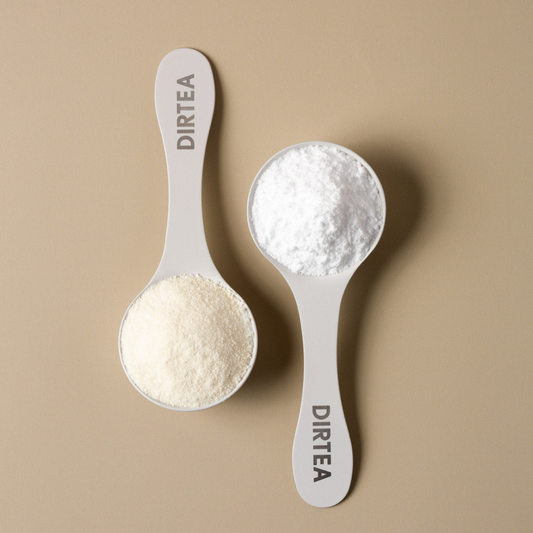
Add a scoop of a DIRTEA Super Blend to your smoothie or morning drink to incorporate functional mushrooms + vitamins (like B12 and B5) that support normal energy-yielding metabolism.
This creates a gentler, more predictable release of energy into your bloodstream.
2. Delay caffeine — and pair it wisely
To avoid the caffeine crash:
-
Hydrate first
-
Eat breakfast before or with caffeine
-
Wait at least 60 minutes after waking
-
Consider blending caffeine with adaptogens
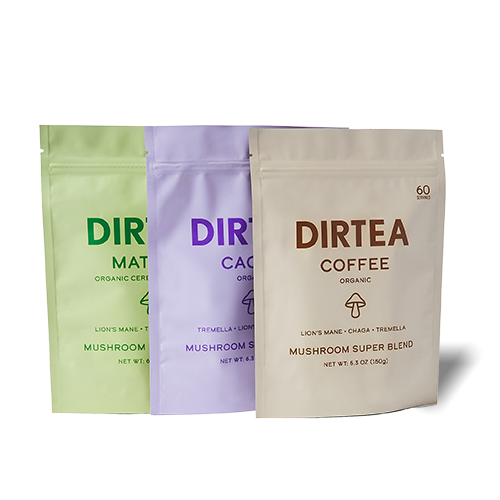
Adaptogenic drinks such as DIRTEA’s Mushroom Coffee can provide:
-
A smoother rise
-
More stable focus
-
Less jitteriness
-
A sustained sense of clarity rather than a spike-and-dip
Lion’s Mane pairs especially well in the morning for cognitive support, while added B12 in certain blends contributes to normal psychological function.
3. Add adaptogenic drinks for a natural energy boost
Adaptogens are botanicals and functional mushrooms traditionally used to help the body adapt to stress and maintain balance.
DIRTEA powders and blends include:
-
Lion’s Mane → often used for clarity and focus
-
Cordyceps → associated with vitality and stamina
-
Chaga → naturally rich in antioxidant compounds
-
Reishi → known for supporting relaxation (best for evenings)
Many DIRTEA blends contain vitamin B12, which contributes to normal energy-yielding metabolism and a reduction of tiredness and fatigue.
Instead of pouring a second coffee at 11am, choose an adaptogenic drink for a more grounded lift.
4. Use micro-movement to reset your energy
A short activity break can shift your physiology fast.
Try this 5-minute mid-morning ritual:
-
Stand and stretch your arms overhead.
-
Roll your shoulders back.
-
Do 20 seconds of squats or calf raises.
-
Walk around for 2–3 minutes.
-
Take slow, deep breaths.
This supports circulation, oxygen supply, posture and mental clarity — all essential for reducing the crash.
5. Snack with intention
If you need a snack, avoid blood-sugar bombs.
Choose:
-
Nuts + fruit
-
Hummus + veg sticks
-
Rice cakes with nut butter
-
Yoghurt with seeds
-
A DIRTEA mushroom drink to support more stable energy
The goal: balance, not buzz.
6. Improve your evening routine to protect your next morning
Your morning energy is influenced more by yesterday evening than by your morning coffee.
Try:
-
A consistent bedtime
-
Screen-free wind-down
-
Light dinner
-
A calming ritual such as Reishi Calm Cacao as part of your evening routine
Better rest = a gentler, more stable morning.
Create a supportive 11 am ritual with DIRTEA
Instead of fighting the slump, transform it into a grounding moment.
At 10:30–11am:
-
Step away from your screen
-
Hydrate
-
Do a short movement break
-
Make a supportive drink:
Choose your goal:
-
Mental clarity → Lion’s Mane Focus Powder
-
Physical stamina → Cordyceps Performance Powder
-
Daily antioxidant ritual → Chaga Immunity Powder
-
Long-term balance → Super Blends with added B-vitamins
Your mid-morning pause becomes a tool for stability, not survival.
FAQs
Why do I always feel tired around 11am?
Most people experience this due to a combination of blood sugar dips, caffeine timing, sleep debt and morning stress. These factors can converge and create a noticeable dip late morning.
Can adaptogenic drinks replace my morning coffee?
They can — but they don’t have to. Many people combine the two, using adaptogenic drinks either before coffee, with coffee, or as a mid-morning alternative to a second cup.
What is the best DIRTEA product for the mid-morning energy slump?
For mental clarity: Lion’s Mane
For stamina or physically demanding days: Cordyceps
For daily wellbeing support: Chaga
For a nutrient-rich option: Super Blends with added B-vitamins
Why do sugary snacks make my slump worse?
They cause a rapid rise in blood sugar followed by a sharp drop, intensifying tiredness and cravings.
Will improving my sleep reduce the slump?
Yes — even small improvements in sleep quality can significantly stabilise your daytime energy curve.
References
-
Centers for Disease Control and Prevention. (2024, May 15). Prediabetes: Could it be you? U.S. Department of Health & Human Services. https://www.cdc.gov/diabetes/communication-resources/prediabetes-statistics.html#:~:text=About%2098%20million%20American%20adults,t%20know%20they%20have%20it.
-
National Heart, Lung, and Blood Institute. (n.d.). What are the health effects of sleep deprivation? U.S. Department of Health and Human Services. https://www.nhlbi.nih.gov/health/sleep-deprivation/health-effects
-
Centers for Disease Control and Prevention. (2016, February 18). 1 in 3 adults don’t get enough sleep. CDC Newsroom.m